7 Best Open-Source Image Generation Models in 2026
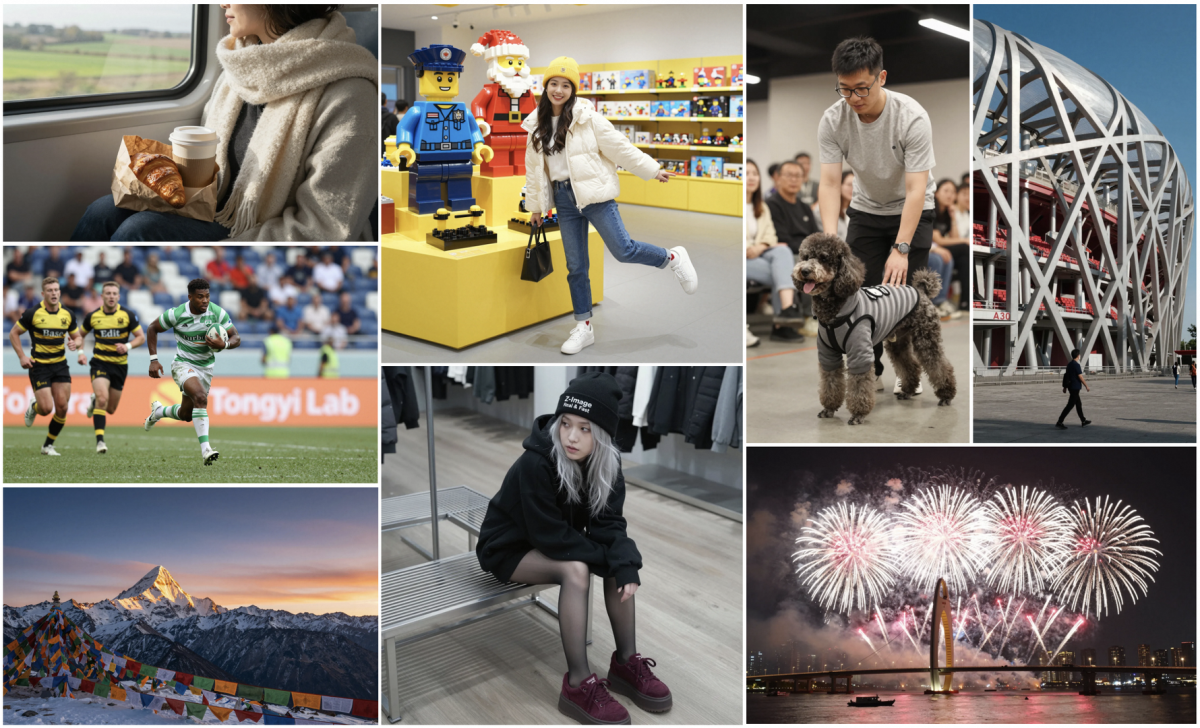
The open-source generative AI revolution has reached a historic inflection point. In 2026, running local text-to-image models on your own workstation is no longer a compromise—it is the industry standard for professional digital artists, concept designers, and creative technologists.
The best open source image generation models in 2026 now rival and frequently surpass proprietary cloud walled gardens like Midjourney and DALL-E 3. With modern Diffusion Transformer (DiT) architectures, native 4K rendering, flawless typography rendering, and permissive open-weight licensing, creators have unprecedented power and creative sovereignty.
💡 Quick Verdict: If you want peak photorealism and typographic precision, FLUX.2 is the unrivaled benchmark. If you want a revolutionary 6B parameter balance of speed, bilingual typography, and single-stream efficiency, Alibaba Tongyi Z-Image is the rising star of 2026. For blistering sub-second 4K rendering on a laptop GPU, choose NVIDIA Sana. For unified visual understanding and image synthesis, choose DeepSeek Janus-Pro. For the richest ecosystem of community LoRAs and ControlNet workflows, stick with Stable Diffusion 3.5 Large.
Let's examine how the landscape shifted before diving into our ranked breakdown of the top 7 open-source image generation models in 2026.
The 2026 Open-Source Image Generation Landscape
Over the past year, the architecture powering open-source image synthesis underwent a profound evolution:
The Triumph of Single-Stream & Multimodal Diffusion Transformers (DiT): Traditional U-Net architectures have largely given way to unified transformers that process text semantics and latent pixels simultaneously.
Deep Compression Autoencoders (DC-AE): Breakthroughs in latent compression allow models to generate ultra-high-resolution 4K imagery with a fraction of the VRAM previously required.
Complex Text & Typography Rendering: Where older models struggled with gibberish lettering, 2026 models render crisp, legible paragraphs, product packaging labels, and brand logos on command.
Permissive Open Licenses: Apache 2.0 and MIT releases have made commercial deployment safe, cost-effective, and fully auditable.
Here is the comprehensive listicle comparison of the 7 leading open-source models ranked by fidelity, efficiency, and real-world versatility.
7 Best Open-Source Image Generation Models in 2026 Ranked
1. FLUX.2 (Black Forest Labs) — The Gold Standard for Photorealism & Typography
Developed by the pioneering team behind the original Stable Diffusion architecture, FLUX.2 remains the reigning king of open-weight image generation. Combining a 12-billion parameter hybrid transformer backbone with dual text encoders (CLIP and T5-XXL), FLUX.2 produces anatomical precision and photographic lighting that consistently wins blind aesthetic benchmarks.
Key Highlights & Architecture
Flawless Text Rendering: Renders complex quotes, curved typography, and multi-line product packaging with near 100% accuracy.
Anatomy & Skin Texture: Eliminates synthetic "plastic skin" artifacts, delivering natural micro-pores, realistic lighting falloff, and anatomically accurate hands.
Multiple Model Flavors: Available in distilled 4-step Schnell, non-distilled Dev, and cloud-optimized Pro variants.
Pros & Cons
Pros:
Unmatched prompt adherence and compositional complexity.
Industry-leading text synthesis in posters, logos, and UI mockups.
Massive community adoption across ComfyUI, SwarmUI, and Forge.
Exceptional high-frequency detail and dynamic range.
Cons:
High hardware requirements (demands 16GB+ VRAM for comfortable FP16/BF16 local generation).
Slower generation times compared to lightweight distilled DiTs.
Non-commercial licensing restrictions on the standard Dev weights.
Best For
Professional visual artists, branding studios, and creative directors who demand uncompromising output quality.
2. Alibaba Tongyi Z-Image & Z-Image-Turbo — The 6B S3-DiT Efficiency Powerhouse
One of the most exciting breakthroughs in 2026 is Z-Image & Z-Image-Turbo, developed by Alibaba's Tongyi-MAI team. Built on a groundbreaking Scalable Single-Stream Diffusion Transformer (S3-DiT) architecture, Z-Image proves that a tightly optimized 6-billion parameter model can punch far above its weight class.
Key Highlights & Architecture
Scalable Single-Stream DiT (S3-DiT): Rather than using separate dual-stream networks for text and image data, S3-DiT concatenates text embeddings, visual semantic tokens, and image VAE latents into a unified sequence, drastically boosting parameter efficiency.
Z-Image-Turbo (8 Steps): Distilled to require only 8 inference evaluations (NFEs), producing crisp, highly detailed 1024x1024 visuals in under a second on standard GPUs.
Full Foundation Base Variant: The non-distilled 6B base model supports full Classifier-Free Guidance (CFG), negative prompting, and custom LoRA fine-tuning.
Permissive Apache 2.0 License: Completely open for both commercial software integration and private local hosting.
Pros & Cons
Pros:
Incredible visual quality-to-size ratio, rivaling 12B+ models at half the memory footprint.
Outstanding bilingual text rendering in both English and Chinese across signage, labels, and posters.
Generates full-fidelity images in just 8 steps via Z-Image-Turbo.
Fully compatible with 16GB VRAM consumer GPUs, Apple Silicon, and ComfyUI.
Permissive Apache 2.0 commercial licensing.
Cons:
Third-party LoRA ecosystem is rapidly growing but still smaller than Stable Diffusion 3.5.
Requires modern node updates in legacy UI tools to leverage the unified S3-DiT token stream.
Best For
Developers, startups, and creative artists seeking commercial-ready 12B-tier visual quality and sub-second generation speeds on consumer hardware.
3. NVIDIA Sana (0.6B & 1.6B) — The Speed King for Laptop & Consumer GPUs
NVIDIA Sana represents the most mathematically efficient text-to-image architecture released to date. Utilizing Deep Compression Autoencoders (DC-AE) and linear attention mechanisms, Sana generates native 4K visuals in under two seconds on consumer-grade hardware.
Key Highlights & Architecture
Linear DiT Backbone: Replaces quadratic attention with linear self-attention, reducing compute complexity by over 80%.
Deep Compression (32x): Compresses images 32 times into latent space, enabling native 4096x4096px generation without tiled upscaling.
Ultra-Lightweight Footprint: The 0.6B parameter model runs comfortably on 6GB VRAM GPUs, including gaming laptops.
Pros & Cons
Pros:
Generates 1024x1024 images in sub-second speeds on standard desktop hardware.
Native 4K output directly from text prompts without external upscalers.
Permissive Apache 2.0 license for unrestricted commercial use.
Incredibly low memory footprint.
Cons:
Smaller parameter size occasionally struggles with dense, multi-character scene choreography.
Smaller library of community fine-tunes compared to Stable Diffusion or FLUX.
Best For
Developers building real-time interactive apps, edge applications, and creators working on mid-range or laptop GPUs.
4. DeepSeek Janus-Pro (1B & 7B) — The Unified Multimodal Understanding & Generation Engine
From the groundbreaking AI lab DeepSeek, DeepSeek Janus-Pro breaks down the artificial barrier between visual understanding and visual generation. Rather than treating image generation as a separate task, Janus-Pro uses a unified autoregressive transformer that can analyze, edit, and create images within a single model weights file.
Key Highlights & Architecture
Decoupled Visual Encoders: Uses separate visual processing pathways for multimodal comprehension (SigLIP) and image generation (vector-quantized tokenizers).
Instruction-Following Precision: Interprets nuanced, multi-step natural language instructions with human-level comprehension.
Permissive MIT License: 100% open-source for commercial and research applications.
Pros & Cons
Pros:
Can understand reference images and generate direct continuations or contextual modifications.
Superb semantic alignment for scientific diagrams, conceptual art, and infographics.
True MIT open-source license with zero commercial restrictions.
Efficient 7B parameter footprint runs smoothly on standard 12GB–16GB VRAM setups.
Cons:
Photorealism on human portraits trails specialized diffusion models like FLUX.2.
Slower inference throughput due to token-by-token autoregressive generation.
Best For
Complex AI agent workflows, multi-turn visual conversations, and developers building visual reasoning tools.
5. Stable Diffusion 3.5 Large (Stability AI) — The Community Customization Titan
Stable Diffusion 3.5 Large is Stability AI's flagship 8.1-billion parameter Multimodal Diffusion Transformer (MMDiT). Supported by the most mature third-party ecosystem in existence, SD 3.5 Large remains the primary platform for custom fine-tuning and specialized workflows.
Key Highlights & Architecture
Triple Text Encoders: Combines CLIP G/14, CLIP L/14, and OpenCLIP with T5-XXL for deep prompt parsing.
Massive Community Support: Thousands of specialized LoRA checkpoints, ControlNet pose adapters, and IP-Adapter nodes.
Stability Community License: Free for commercial use by individuals and businesses with under $1M in annual revenue.
Pros & Cons
Pros:
The widest selection of community LoRAs, styles, and custom fine-tunes in the world.
Full support across every major local UI and node-based pipeline.
Excellent balance of photorealism, artistic styles, and compositional variety.
Highly robust pose guidance and sketch-to-image workflows.
Cons:
Prompt adherence on complex typography can be inconsistent compared to FLUX.2 and Z-Image.
Complex multi-encoder setup requires significant memory management during initialization.
Best For
Concept artists, game developers, and technical creators who rely on custom LoRA training and advanced ControlNet workflows.
6. Tencent Hunyuan Image 3.0 (HunyuanDiT) — The Enterprise Composition Specialist
Tencent's HunyuanDiT is a bilingual, enterprise-scale Diffusion Transformer engineered for cinematic compositions, intricate architectural rendering, and authentic cultural aesthetics.
Key Highlights & Architecture
Native Bilingual Understanding: Trained natively on extensive paired English and Chinese datasets for cultural precision.
Multi-Resolution Native Training: Generates diverse aspect ratios without aspect-ratio distortion or repetitive tiling.
Progressive Fine-Grained DiT: Delivers clean depth layering and realistic atmospheric perspective.
Pros & Cons
Pros:
Exceptional rendering of complex architectural scenes, landscape vistas, and interior spaces.
Native bilingual prompt comprehension with deep understanding of idiom and cultural nuance.
Highly stable compositional structure with minimal geometric distortion.
Permissive open-weight access for research and commercial adoption.
Cons:
English typography capabilities are less flexible than FLUX.2 or Z-Image.
English community tooling and documentation are smaller than Western counterparts.
Best For
Architectural visualizers, landscape artists, and international creative agencies targeting global and Asian markets.
7. Qwen Image Max (Alibaba Cloud) — The Heavyweight Spatial Reasoning Contender
Stemming from Alibaba's acclaimed Qwen model family, Qwen Image leverages massive pre-training on visual reasoning datasets to excel at structured, diagrammatic, and highly detailed visual creation.
Key Highlights & Architecture
Deep Multimodal Foundation: Inherits visual reasoning tokens from the Qwen2.5-VL foundation model.
High-Density Object Composition: Accurately places dozens of distinct objects in a single frame according to exact spatial relationships.
Fine-Grain Material Rendering: Exceptional replication of reflective metals, glass refraction, and textured fabrics.
Pros & Cons
Pros:
Superb spatial awareness ("object A to the left of object B on top of table C").
Outstanding rendering of complex machinery, product renders, and sci-fi environments.
Strong multilingual text parsing.
Cons:
Heavy VRAM consumption during full unquantized execution.
Limited out-of-the-box support in legacy WebUI tools without custom nodes.
Best For
Product designers, 3D visualization artists, and creators building sci-fi and industrial design assets.
Side-by-Side Comparison Matrix
Here is how the top 7 open-source image generation models stack up across key technical criteria in 2026:
Model | Parameter Size | Primary Strength | Minimum VRAM | License Type | Text Rendering |
|---|---|---|---|---|---|
FLUX.2 | 12B | Photorealism & Typography | 16 GB | Open-Weight / Custom | Outstanding |
Alibaba Z-Image | 6B | 8-Step S3-DiT Efficiency | 16 GB | Apache 2.0 | Outstanding |
NVIDIA Sana | 0.6B – 1.6B | Sub-Second 4K Speed | 6 GB | Apache 2.0 | Very Good |
DeepSeek Janus-Pro | 1B – 7B | Unified Vision + Generation | 12 GB | MIT License | Good |
SD 3.5 Large | 8.1B | LoRAs & ControlNet Ecosystem | 12 GB | Stability Community | Good |
Tencent Hunyuan 3.0 | 1.5B – 7B | Architecture & Bilingualism | 12 GB | Open-Weight | Moderate |
Qwen Image | 7B+ | Spatial Reasoning & Details | 16 GB | Open-Weight | Very Good |
How to Choose the Right Model for Your Workflow in 2026
To determine which open-source model belongs in your production toolkit:
Choose FLUX.2 if you require the absolute highest visual quality, commercial packaging design, or editorial photography.
Choose Alibaba Z-Image / Z-Image-Turbo if you want 12B-grade photorealism and bilingual typography with rapid 8-step inference under a permissive Apache 2.0 license.
Choose NVIDIA Sana if you work on a laptop or want instant sub-second native 4K generations on 6GB VRAM.
Choose DeepSeek Janus-Pro if you are building autonomous AI agents that need to inspect, understand, and generate visuals in a continuous loop.
Choose Stable Diffusion 3.5 Large if your workflow depends heavily on existing ControlNet poses, depth maps, and custom community LoRA checkpoints.
Summary
The open-source generative image ecosystem in 2026 has rendered proprietary walled gardens obsolete for serious technical creators. From the raw power of FLUX.2 to the compact S3-DiT efficiency of Z-Image and the sub-second speed of NVIDIA Sana, choosing the right open-weight model empowers you to take full ownership of your creative pipeline with zero subscription fees and complete privacy.